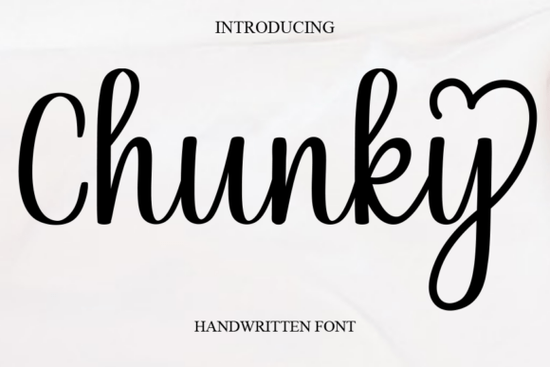
When you are looking for a typeface that balances elegance with everyday readability, a sweet handwritten script often does the trick. The Chunky Font delivers exactly that kind of gentle, cursive feel without slipping into overly formal territory. Designers, print-on-demand sellers, and creative hobbyists usually turn to this style when they want to add a warm, romantic touch to branding materials or personal projects. Because it mimics natural handwriting while keeping its strokes consistent, it reads clearly at medium to large sizes and adapts well to both digital and print workflows.
How does a handwritten script fit into everyday branding?
Many small business owners assume script typefaces are only for weddings or formal invitations. In reality, a casual cursive works well when paired with clean sans-serif or structured serif alternatives. You can use it for accent text, product tags, or social media graphics where personality matters more than rigid corporate polish. The rounded terminals and steady baseline keep the layout from looking cluttered. If you pair it with a neutral body font, your logo and packaging will feel approachable rather than stiff. I have tested similar handwritten options on product mockups, and the ones with consistent letter spacing always perform better across different printing methods.
What projects work best with this typeface?
This style naturally suits projects that need a soft, inviting tone. You can apply it to wedding suites, greeting cards, fashion lookbooks, and boutique marketing materials. Crafters often use script fonts on sublimation transfers, vinyl decals, and custom apparel because the flowing curves translate well when scaled. When designing for print, remember to increase the line spacing slightly so the loops do not overlap. Digital designs benefit from slightly tighter kerning, but always preview your work at the final size before exporting. A gentle handwritten style also works well on café menus, handmade product labels, and seasonal promotions where you want to convey warmth without sounding corporate.
If you want to explore other script variations for your next project, consider checking out Sometimes for a looser connection between letters, or look at Hey Baby when you need a more playful bounce. Both options pair nicely with minimalist layouts and help break up dense blocks of text. For outlined effects or layered typography, Kayla Outline offers a clean stroke that stands out against busy backgrounds without overwhelming the viewer.
Are there similar script options worth trying?
The Winky Swing collection is another solid choice for casual branding, especially when you need a bit more movement in the lowercase connections. Each of these typefaces follows a similar cursive logic but brings its own rhythm to the page. When you are testing them side by side, pay attention to how the ascenders and descenders interact with your layout grid. Some scripts lean slightly left, while others keep a neutral vertical axis. Matching that subtle tilt to your overall composition will make your final design look polished rather than assembled. You can browse Chunky directly on Creative Fabrica to view all available file formats and licensing details before downloading.
What should beginners keep in mind when pairing fonts?
Start with a simple contrast. If your script has heavy curves, pick a secondary font with straight, even strokes. Avoid using two cursive typefaces in the same paragraph because the competing letterforms will strain readability. Keep your hierarchy clear: let the script handle headings or short phrases, and reserve a clean body font for instructions, descriptions, or terms and conditions. You can use italic or bold sparingly within the secondary font to guide the eye without cluttering the page. Always test your pairing in grayscale first. If the visual weight balances without color, your typography foundation is solid.
Licensing matters just as much as aesthetics. Before uploading your files to print-on-demand platforms or sharing them with clients, verify the commercial terms that come with your download. Some creators include personal use only, while others allow broader distribution. When you are building a brand library, keep a simple spreadsheet tracking font names, foundry details, and license types. This saves time during audits and prevents accidental misuse. If you need a wider selection of handwritten options, you can browse related script categories for vetted, commercial-ready choices.
Before finalizing your project, run through this quick typography checklist:
- Print a test sheet at the exact size to check letter spacing and loop overlap.
- Verify that all required ligatures or alternate characters are enabled in your design software.
- Export a high-resolution PNG or PDF to compare how the curves render against your background color.
- Step back from your screen for a few minutes and read the text aloud to catch awkward line breaks.
- Start with a single color draft, then layer textures or drop shadows only after the typography sits perfectly on its own.
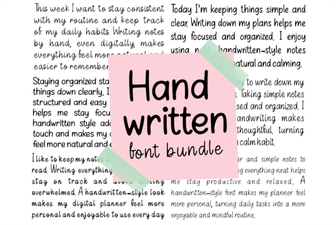 Creative Projects with Handwritten Font Bundles
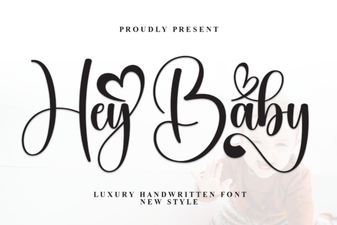 Hey Baby Font: Creative Uses for Your Designs
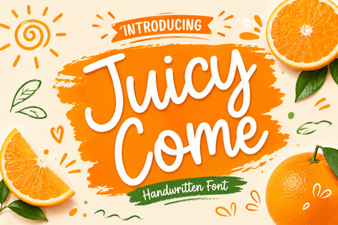 Juicy Come Font: Download & Creative Project Ideas
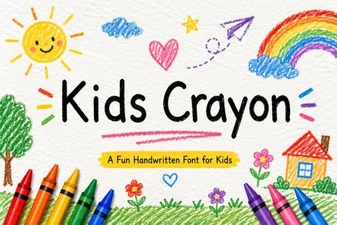 Creative Crayon Fonts for Kid-Friendly Designs
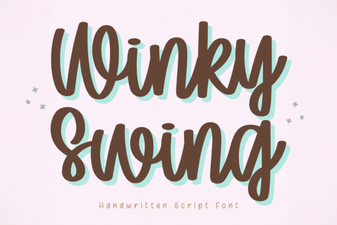 The Winky Swing Font for Creative Web Design
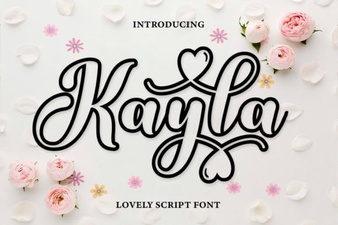 Craft with Kayla Outline Modern Font Design